Speakers from the Industrial Sector
-

Jonathan Lenchner IBM Research USA Abstract -

Hung Q. Ngo RelationalAI USA Abstract
Fukuoka, September 29 – October 3, 2025
Co-organized by the Institute of Mathematics for Industry at Kyushu University and Universitat Politècnica de València
Modern specification languages are based on logic. For any such language there exists a specific logical system underlying the language's features and constructions. The logic-based approach has great advantages for formal software verification, since it guarantees precision and clarity in the process of software development. On the other hand, it resulted in a proliferation of logical systems in specification theory, each tailor-made for a particular language. Essentially the same arguments and results had to be used for each of these systems, just to fit a different language. To avoid such redundancies, a unifying framework is clearly needed. One could then prove logical results in an abstract way and then apply them to concrete specification languages. Such a framework would also contribute to a deeper understanding of the causality relations between logic properties which are often hindered by the unnecessary details of concrete logics.
Category theory suggests itself as a general supporting structure, since it focuses on relations between objects rather than the precise way the objects are built. On the other hand, universal algebra plays an important role in defining the semantics of algebraic specification languages. Therefore, there exists a strong connection between logic, category theory and algebraic structures, especially in the context of formal methods, where mathematically grounded techniques are developed for modeling and verifying complex systems in various fields of computing science.
|
|
Jonathan Lenchner IBM Research USA Abstract |
|
|
Hung Q. Ngo RelationalAI USA Abstract |

|
Guillermo Badia The University of Queensland Australia Abstract |
|
Francisco Durán
University of Málaga Spain Abstract |

|
Santiago Escobar
Universitat Politècnica de València Spain Abstract |
|
Kokichi Futatsugi
Japan Advanced Institute of Science and Technology Japan Abstract |

|
Marcel Jackson
La Trobe University Australia Abstract |

|
Tomasz Kowalski
Jagiellonian University Poland Abstract |

|
Zbyszek Krol
Warsaw University of Technology Poland Abstract |

|
Carles Noguera
The University of Siena Italy Abstract |
|
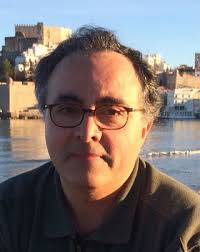
Kazuhiro Ogata
Japan Advanced Institute of Science and Technology Japan Abstract |
|
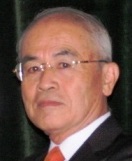
Narciso Martí Oliet
Universidad Complutense de Madrid Spain Abstract |
|
Hiroakira Ono
Japan Advanced Institute of Science and Technology Japan Abstract |
|
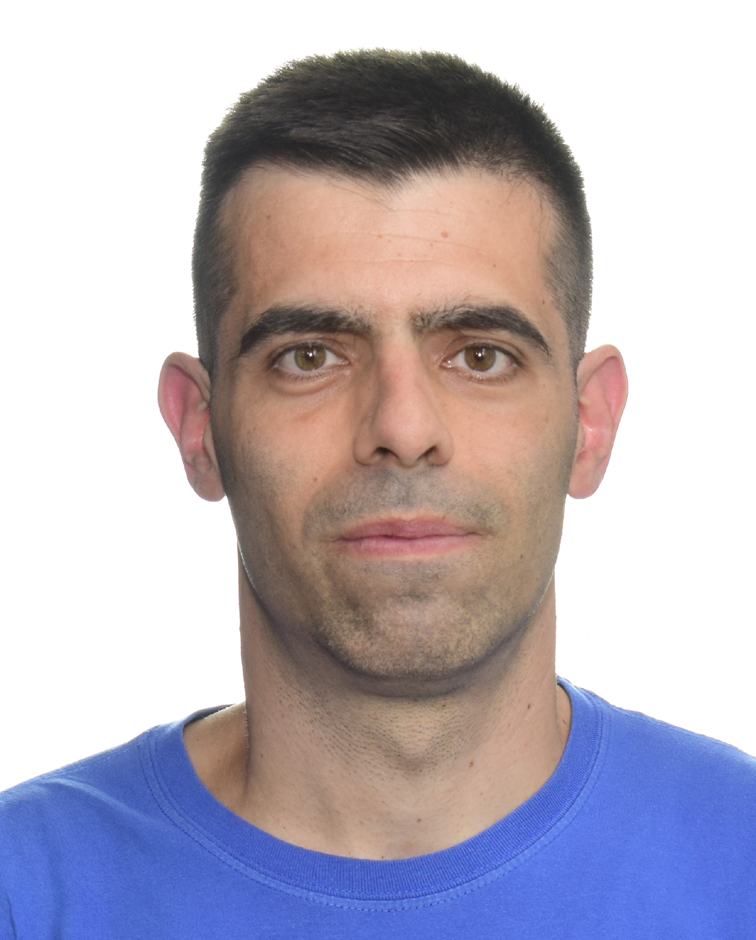
Adrián Riesco Rodríguez
Universidad Complutense de Madrid Spain Abstract |

|
Sasha Rubin
University of Sydney Australia Abstract |

|
Mark
Reynolds
The University of Western Australia Australia Abstract |
|
Ruben Rubio
Universidad Complutense de Madrid Spain Abstract |

|
Ionuț Țuțu
Institute of Mathematics of the Romanian Academy Romania Abstract |

|
Beatriz Alcaide García Complutense University of Madrid Spain Abstract |
|
|
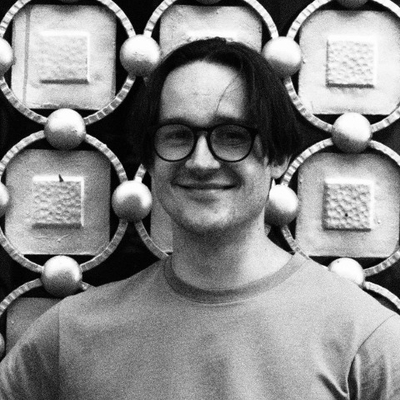
Go Hashimoto Joint Graduate School of Mathematics for Innovation Kyushu University Japan Abstract |
|
Krzysztof
Krawczyk
Jagiellonian University Poland Abstract |

|
Diamant Pireva The University of Queensland Australia Abstract |
To register for LAC 2025, please fill in the following form.
Zoom broadcast details will be sent to all registered participants!
The workshop will be held at Ito Campus, IMI Auditorium (W1 - D 413).
Maps and details about the location can be found here.
If you're using public transportation, we recommend taking the train to Kyudai-Gakkentoshi Station, followed by a bus to the Ito Campus. Please refer to the link above for more details.
Accommodation options nearby include:
|
|
Guillermo Badia The University of Queensland Australia |
|
|
Santiago Escobar
Universitat Politècnica de València Spain |

|
Ronald Fagin IBM Almaden Research Center USA |

|
Daniel Găină Institute of Mathematics for Industry Kyushu University Japan |

|
Tomasz Kowalski Jagiellonian University Poland |
|
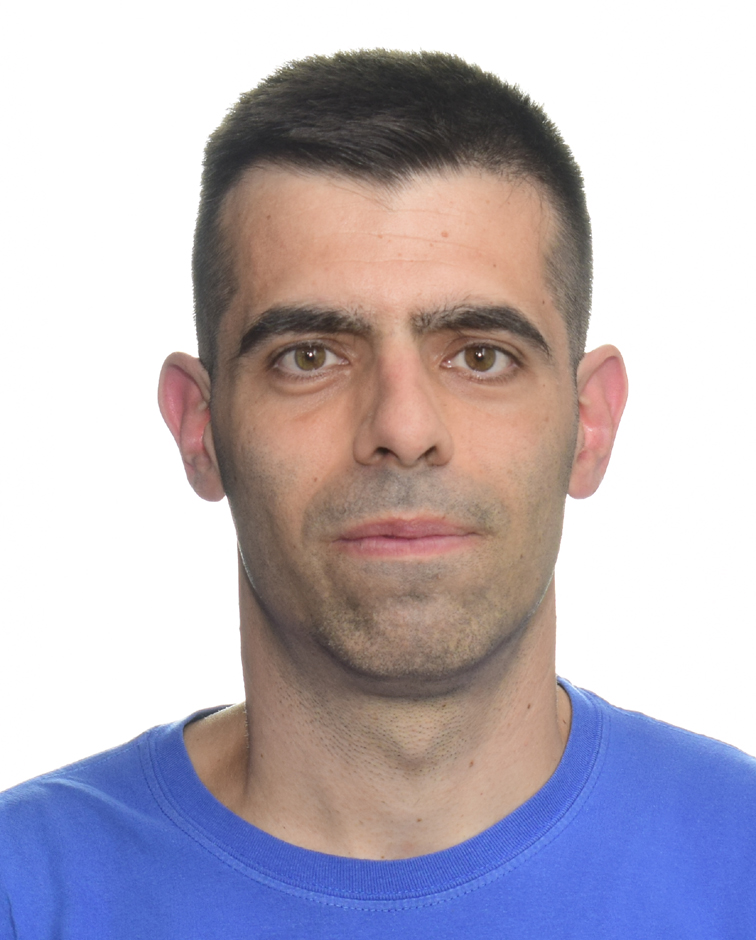
Yoshihiro Mizoguchi Institute of Mathematics for Industry Kyushu University Japan |
|
Adrián Riesco Rodríguez Complutense University of Madrid Spain |

|
Ionuț Țuțu Simion Stoilow Institute of Mathematics of the Romanian Academy Romania |
If you have any questions or inquiries about LAC 2025 you can contact us via e-mail at lac2025 [at] imi.kyushu-u.ac.jp